
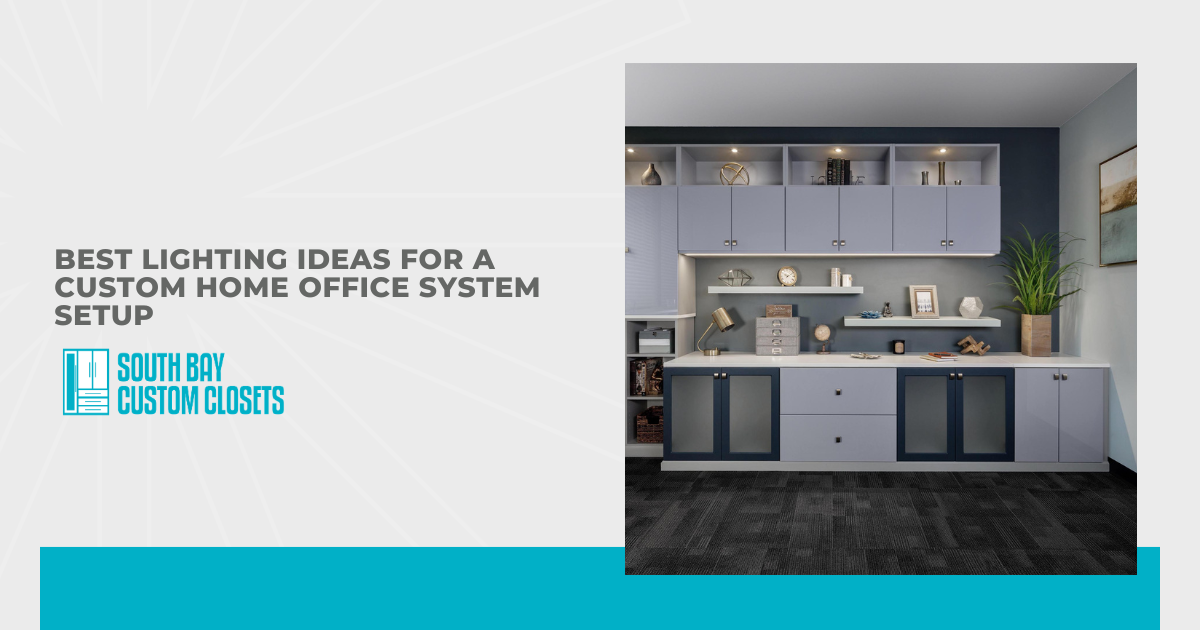
Lighting is one of the most overlooked parts of a home office setup, and it's usually the last thing on anyone's checklist. Poor lighting strains your eyes, makes your space look flat, and reduces comfort during long work hours. Get it right, and your workspace feels sharper, more inviting, and easier to work in. It's a detail that shapes how your entire setup looks and functions, whether you're on a video call or deep in a deadline.
From natural light placement to under-cabinet LEDs, the best lighting ideas for a custom home office system setup come in more forms. I've found that layering different types of light, rather than relying on just one source, makes the biggest difference in how a workspace feels and performs. Some options work best for focus and detail-heavy tasks, while others add warmth or highlight the parts of your office you're most proud of. The right combination depends on your layout, habits, and the overall feel you're going for.
If you're not sure which lighting choices are worth considering for your home office, here are the setups I lean on most to keep any workspace bright, comfortable, and easy on the eyes:
- Make the most of natural light
- Layer in overhead and ambient lighting
- Add task lighting for your desk
- Brighten storage with under-cabinet LED strips
- Use accent lighting for shelves and bookcases
- Try a floor lamp for soft, supplemental light
- Go smart with modern lighting controls
- Choose the right color temperature for your work style
- Use a bias light behind your monitor to reduce eye strain
Each of these ideas plays a part in turning your home office into a space that feels welcoming, focused, and conducive to working.
Make the Most of Natural Light
Natural light sets the tone for any home office, and it's the first thing I look at before adding a single fixture. Sunlight keeps you alert, supports better focus, and makes the whole room feel bigger and more welcoming. Position your desk so daylight comes from the side rather than straight ahead or behind you. Side lighting cuts down on screen glare while still filling your workspace with a soft, even glow.
When I design a custom home office system, I always recommend keeping windows clear and shelving thoughtfully placed so daylight can reach deep into the room. Tall cabinets or bulky storage near a window can block that light and leave your desk feeling dim by mid-afternoon. Sheer shades or adjustable blinds give you control over brightness without shutting the sun out completely. You'll get flexibility on bright days and a bit of privacy when you need it.
Reflected light matters just as much as the light coming through the glass. Light-colored walls, a pale desktop, or a well-placed mirror can bounce sunlight around and brighten corners that would otherwise stay shadowed. I've found that even a small change in wall color transforms how a home office feels from morning to evening. Start with what nature gives you for free, then layer in your other fixtures to fill the gaps.
Layer in Overhead and Ambient Lighting
Overhead and ambient lighting form the backbone of your home office, filling the room with steady, even light so no corner feels gloomy. Natural light comes and goes throughout the day, but ambient lighting keeps your space consistent from early morning to late evening. Think of it as the base layer you build everything else on top of. Get this right, and your desk lamps and accent lights have something solid to work with.
When I plan the ambient lighting for a custom home office system, I focus on spreading light evenly rather than relying on one harsh fixture in the center of the ceiling. Here's what I lean on most:
- Recessed Ceiling Lights: Recessed fixtures tuck into the ceiling and cast a clean, uniform glow across the room. They keep sightlines open and won't compete with shelving or artwork on your walls.
- Flush-Mount Fixtures: Flush mounts sit close to the ceiling and work beautifully in rooms with lower clearance. They deliver broad coverage while staying out of the way in a compact home office.
- Dimmable Ambient Lighting: Dimmers let you dial brightness up for focused work or down for calls and quieter tasks. You'll cut eye strain and set the right mood without swapping bulbs.
Balance keeps the whole setup from feeling flat or overly bright. I've found that pairing warm ambient light with cooler task lighting gives a home office real depth and comfort. Position your overhead fixtures so light wraps the room evenly instead of pooling in one spot. Once your ambient layer feels right, you're ready to add focused task lighting exactly where you need it most.
Add Task Lighting for Your Desk
Task lighting does the heavy lifting in any home office, shining focused light exactly where you read, write, and work. Ambient light fills the room, but it rarely delivers enough brightness for close-up tasks without casting shadows across your desk. I always recommend adding a dedicated task light so your eyes aren't straining to read fine print or paperwork by mid-afternoon. Direct, adjustable light at your desk keeps you sharp and comfortable through long stretches of focused work.
Several styles work well depending on your desk size and the way you like to work. Here are my go-to options:
- Classic Desk Lamps: Desk lamps sit right where you need them and give you steady, reliable light for reading and writing. Look for one with a weighted base so it stays put during busy workdays.
- Adjustable Arm Lamps: Swing-arm models let you reposition light on the fly, aiming it wherever your task demands. They're perfect for anyone who shifts between a keyboard, notepad, and paperwork.
- Clip-On Lights: Clip-on fixtures attach to a shelf or desk edge and free up valuable surface space. They're a smart pick for compact setups or a custom home office system with tight clearances.
Placement makes or breaks how well your task lighting performs. Position the light source to the side opposite your writing hand so your own shadow won't fall across the page or keyboard. I've found that angling the light slightly downward, rather than straight into your line of sight, cuts glare and eases eye strain during focused work. Pair a well-placed task light with your ambient layer, and your desk becomes a spot you can settle into for hours without fatigue.
Brighten Storage with Under-Cabinet LED Strips
Under-cabinet LED strips solve a problem most people overlook until they're squinting into a dark shelf. Once your natural light, ambient fixtures, and task lighting are in place, storage areas can still fall into shadow, especially the cubbies and cabinets tucked below eye level. LED strips slip right under the lip of an upper cabinet and wash light straight down onto whatever you keep there. You'll find files, supplies, and reference materials far faster when they're actually lit.
I always recommend LED strips for any custom home office system because they run cool, sip electricity, and last for years without a fuss. Their low profile means you won't see the fixture itself, only the clean, even glow it throws across your workspace. Warm-white strips feel cozy for a reading nook, while cooler tones keep detailed tasks crisp and clear. Peel-and-stick backing makes installation simple enough for an afternoon project, so you're not waiting on an electrician for a quick upgrade.
Getting the most out of LED strips comes down to one simple rule — mount them toward the front edge of the cabinet's underside so light falls onto the work surface rather than the back wall. I've found that pairing dimmable strips with a simple switch gives you soft accent light in the evening and full brightness when you're digging through paperwork. Get your storage properly lit, and you'll rarely reach for a flashlight or drag your desk lamp across the room again.
Use Accent Lighting for Shelves and Bookcases
Accent lighting turns plain shelving into a focal point that gives your home office character and warmth. Ambient and task fixtures handle the practical work, but accent lighting adds depth by drawing the eye toward the books, awards, and décor you're proud to display. I've found that a home office with well-lit shelving feels finished and intentional, rather than purely functional. Small pools of light across your bookcases create visual interest without adding a single overhead fixture.
Several accent options work beautifully depending on your shelving style and the mood you're after:
- Puck Lights: Puck lights mount inside or above cubbies to spotlight a favorite piece or a row of books. They're compact, battery or hardwired, and easy to reposition as your display changes.
- LED Strip Accents: Strip lights tucked along the back edge of a shelf cast a soft halo behind your items. They add a modern glow that makes a custom home office system feel polished and high-end.
- Adjustable Spotlights: Directional spots let you aim light at artwork or a standout object with precision. Perfect for highlighting one hero piece, they give your shelving a gallery-like touch.
Restraint keeps accent lighting from tipping into distraction during your workday. I always recommend using dimmable accents so you can soften the glow for calls and brighten it when you want the room to feel alive. Focus on two or three highlights rather than lighting every shelf, since scattered light loses its impact fast. Get the balance right, and your bookcases will feel like a designed part of the space instead of an afterthought.
Try a Floor Lamp for Soft, Supplemental Light
Floor lamps fill the gaps that overhead and task lighting leave behind, softening the corners of a home office and rounding out the whole room. Ambient fixtures cover the broad strokes, but they rarely reach the shadowy edge near a reading chair or the far side of a desk. I've found that adding one well-placed floor lamp instantly warms up a space and makes it feel less like an office and more like a room you'll happily spend hours in. Supplemental light also gives your eyes a gentle break from the direct glow of a screen or desk lamp.
Different floor lamp styles serve different needs, so pick the one that matches your layout and the way you work:
- Torchiere Lamps: Torchieres bounce light off the ceiling for a soft, indirect wash across the whole room. They're ideal when you want brightness without any harsh glare aimed at your eyes.
- Arc Floor Lamps: Arc lamps reach over a desk or chair to drop focused light exactly where you're working. Their curved design keeps the base tucked away, saving precious floor space.
- Adjustable Reading Lamps: Reading lamps with a bendable neck let you angle light toward a book or side table with ease. They're perfect for a cozy corner in your custom home office system.
A good floor lamp earns its spot by sitting slightly behind or beside your seat, so light falls over your shoulder rather than straight into your eyes or screen. I always recommend pairing it with a dimmable bulb so you can soften the glow for evening calls and push it brighter when the room needs more life. Get this layer right, and your home office gains warmth, flexibility, and a finished feel no single ceiling fixture can match.
Go Smart with Modern Lighting Controls
Smart lighting controls give your home office a level of flexibility that traditional switches simply can't match. With dimmers, smart bulbs, and app-based settings, you can adjust brightness and color throughout the day without leaving your chair. I've found that clients who add smart controls stop fiddling with lamps and start focusing on their actual work. Small conveniences like these add up to a smoother, more comfortable workday.
- Dimmers and Smart Bulbs: Dimmable smart bulbs let you shift from bright, focused light in the morning to a softer glow for evening calls. You'll cut eye strain and set the right mood with a quick tap or voice command.
- Voice and App Control: Voice assistants and mobile apps put your entire lighting setup at your fingertips, so you can adjust it mid-task without breaking stride. Perfect for busy days, they save you from getting up to reach a switch.
- Schedules and Automation: Automated schedules turn lights on as your workday starts and dim them when it's time to wrap up. Consistent routines like these support better focus and help you protect your evenings.
Controls work best when you set them up with intention rather than leave everything on default. Group your fixtures into zones so you can manage desk lighting, ambient light, and accent lights independently for real flexibility. I always recommend starting with one or two features rather than automating everything at once, since building habits gradually tends to stick better. Get these settings dialed in, and your home office will feel effortless from the first login to the final sign-off.
Choose the Right Color Temperature for Your Work Style
Color temperature shapes how your home office feels and how well you perform in it, yet it's one of the most overlooked lighting choices out there. Measured in Kelvin, bulbs range from warm, amber tones around 2700K to crisp, daylight-like light near 6500K. Warmer light helps you relax and unwind, while cooler light sharpens focus and keeps you alert during demanding tasks. Pick the wrong temperature, and you'll either feel sluggish at your desk or too wired to settle down.
- Warm Light (2700K–3000K): Soft, amber-toned light creates a cozy, calming feel that's ideal for reading, brainstorming, or winding down after a long day. I've found it works beautifully in a home office where you want comfort without harsh glare.
- Neutral Light (3500K–4500K): Balanced white light mimics midday sun and keeps you comfortable across a wide mix of tasks. It's my go-to recommendation for a custom home office system that handles everything from calls to creative work.
- Cool Light (5000K–6500K): Bright, bluish light boosts alertness and sharpens concentration for detailed, high-focus work. Use it during peak hours, but ease off in the evening so it doesn't disrupt your sleep later.
Your work style should drive every color temperature decision you make in your home office. Peak-focus hours call for cooler light, while late-afternoon tasks and evening calls feel better under a warmer glow. I always recommend tunable bulbs here, since they let you shift temperature on the fly instead of locking yourself into one setting all day. Dial this in right, and your lighting will support both your focus and your comfort from your first task to your last.
Use a Bias Light Behind Your Monitor to Reduce Eye Strain
Bias lighting sits behind your monitor and casts a gentle glow onto the wall, easing the harsh contrast between a bright screen and a dark room. Your eyes work overtime when a glowing display floats against a shadowy background, and that strain builds up fast during long stretches at your desk. I've found that adding a simple bias light behind the monitor is one of the cheapest, most effective upgrades you can make in a home office. Soft ambient light around the screen keeps your eyes relaxed and your focus steady well into the evening.
Bias lights come in a few forms, so pick the one that fits your monitor and the way you work:
- USB LED Strips: LED strips stick to the back edge of your monitor and draw power straight from a USB port. They're inexpensive, easy to hide, and give you a clean, even glow with almost no setup.
- Smart Bias Lighting Kits: Smart kits let you tune brightness and color to match the light in your custom home office system. You'll dial in the exact ambiance you want and adjust it as the day shifts.
Where you mount the strip matters more than most people expect, so aim for the back center edge of your monitor rather than tucking it too low or to one side. I always recommend matching the bias light's color temperature to your monitor's white balance so the transition between screen and wall feels seamless. Get this final layer right, and your home office will feel comfortable from your first email to your last.
Conclusion
Good lighting does more than help you see your desk. It shapes how you feel, focus, and function throughout your workday. When your home office is lit with intention, you'll notice the difference in your energy, comfort, and even your mood. Layers of light working together turn a plain room into a space that supports your best work. I've seen it happen again and again with every custom home office system we design. Your space deserves lighting that helps you truly thrive.