
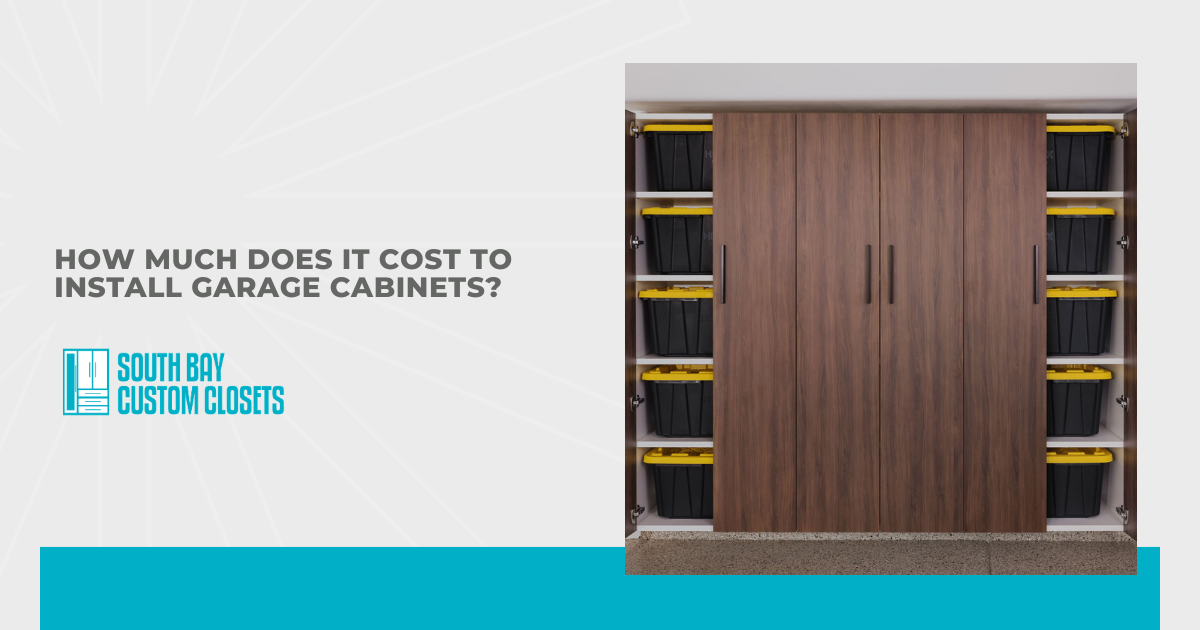
If you've started pricing out garage cabinets, you've probably noticed the numbers are all over the map. One quote might land around a few hundred dollars, while another climbs into the thousands for what looks like a similar setup. The difference usually comes down to choices you actually control, not random markups. Knowing what drives the price helps you budget with confidence instead of guessing.
I've helped plenty of people sort through these decisions, and the same cost factors come up again and again. Once you understand them, you can see exactly where your money goes and where you can trim without giving up quality. Some factors are obvious, like the material you pick. Others, like delivery fees, tend to surprise people at checkout.
Several key decisions shape what you'll pay for garage cabinets:
- Choose the right cabinet material for your budget
- Compare stock, semi-custom, and custom options
- Measure your space before you commit
- Factor in professional installation labor
- Account for add-ons and upgrades
- Include delivery and shipping fees
- Weigh brand reputation and warranty
Let's walk through each one so you can build a realistic budget before you ever place an order.
Choose the Right Cabinet Material for Your Budget
Material is the single biggest factor in what your cabinets will cost, so it's worth understanding your options before anything else. The choice you make here can swing your total by hundreds or even thousands of dollars, depending on how much cabinetry you need. Below are the four most common materials and how they stack up on price and durability:
- Plastic and Resin: These sit at the bottom of the price range and resist moisture without ever rusting. They work well for light storage, though they can sag under heavy tools or sandbags.
- MDF and Thermally Fused Laminate: These land in the middle of the range and look like finished furniture at a friendlier price. The thermally fused laminate finish bonds to the surface under heat and pressure, so it resists moisture, scratches, and daily wear with very little upkeep.
- Steel: This option shrugs off impacts, moisture, and heavy loads with ease, holding up to years of demanding garage use. It costs more upfront, which makes it a favorite for serious workshops that see daily wear and tear.
- Solid Wood: This brings warmth and real strength to the space as a premium choice. It typically arrives already finished and sealed, so it holds up well in garage conditions without extra work on your end.
When you weigh these options, match the material to how you actually use the space. A two-car garage doubling as a workshop justifies steel, while a tidy storage zone rarely needs it. Picking the right fit early keeps you from overspending on durability you'll never put to work.
Compare Stock, Semi-Custom, and Custom Options
Once you've settled on a material, the next big price driver is how much customization you want. Cabinets come in three broad tiers, and each one trades flexibility for cost in a different way. Stock cabinets are prebuilt in fixed sizes and ready to install out of the box, which makes them the most affordable route for garages with standard walls and simple storage needs. Your choices are limited to the sizes and finishes the maker offers, but for most setups, that selection covers plenty.
Semi-custom cabinets give you modular sizing along with a wider range of finishes and accessories. You can adjust dimensions and mix base and wall units to fit your layout more precisely. I usually point people here when their garage has an odd corner or a workbench they want to build around, since the flexibility solves real problems without the full custom price.
Custom cabinets sit at the top, built to your exact specifications down to the inch, and they handle unusual ceilings, sloped walls, and specialty storage the other tiers can't touch. A good rule is to start at the lowest tier that actually meets your needs and only move up when the layout forces your hand. Most garages land comfortably in the stock or semi-custom range, so reserving custom for the genuinely tricky spaces keeps your budget in check.
Measure Your Space Before You Commit
It's easy to focus on the cabinets themselves and forget that the size of your project sets the final bill as much as anything else. The more wall you cover and the more units you hang, the higher your total climbs. Taking accurate measurements before you shop keeps you from over-ordering or coming up short.
Start with your available wall length, then decide how much of it you actually want to fill. A single base cabinet and a matching upper might run a few hundred dollars, while a full wall of base units, wall units, and a tall locker can multiply that several times over. Height matters too, since stacking wall cabinets above your base run adds storage and cost in equal measure.
Don't forget the obstacles that eat into usable wall space. Windows, outlets, the garage door track, and the swing of an entry door all shape what you can install and where. Mapping these out ahead of time tells you exactly how many units fit, which turns a rough guess into a real budget you can plan around.
Factor In Professional Installation Labor
Even the most affordable cabinets come with a question that affects your budget: Who's putting them up? Installation can add a meaningful chunk to your total, so it's worth deciding between hiring a pro and doing it yourself before you buy. The right call depends on your skills, your tools, and the cabinets you've chosen.
Professional installation typically runs by the hour or by the unit, and the price climbs with complexity. Heavy steel cabinets, tall lockers, and wall-mounted runs all take more time and muscle than a couple of base units. Anchoring into studs, leveling on a sloped garage floor, and shimming around uneven walls are exactly the spots where a pro earns the fee, since a cabinet that's mounted wrong can pull loose under load.
Doing it yourself can genuinely save money if you're comfortable with a drill, a level, and a stud finder. Freestanding and prefab units are the friendliest for a DIY weekend, while custom wall systems lean toward professional help. Be honest about the trade-off, because a botched install often costs more to fix than it would have to hire out in the first place.
Account for Add-Ons and Upgrades
Once the cabinets and installation are settled, the extras are what quietly push your final number higher than you expected. Each one seems small on its own, but a few together can add a noticeable amount to the quote. Knowing which upgrades matter to you helps you spend where it counts.
Countertops are often the biggest add-on, turning a row of base cabinets into a real workbench. A basic laminate top stays affordable, while butcher block, stainless, or solid surface costs considerably more. Drawer inserts, dividers, and pull-out trays add convenience and price in the same breath, so pick the ones that match how you store your gear.
Hardware and finishing touches round out the list. Soft-close hinges, upgraded handles, integrated lighting, and locking doors each carry their own cost, and they stack up faster than people expect. When I'm helping someone prioritize, I suggest spending on the upgrades you'll touch every day, like smooth drawer slides, and skipping the ones that only look good in a showroom. A clear sense of your daily routine keeps these choices practical instead of impulsive.
Include Delivery and Shipping Fees
The price you see on a product page rarely covers getting those cabinets to your driveway. Delivery is one of the easiest costs to overlook, and it can land harder than expected on heavy or bulky orders. Cabinets are awkward to ship, so the fee often reflects their bulk rather than their value. Factoring it in early keeps your budget honest and spares you a surprise at the final step.
Weight and size drive most of the charge. Steel cabinets and large custom units often trigger freight shipping and oversized-item surcharges that lighter materials avoid. Some retailers fold delivery into the sticker price, while others tack it on at checkout, so it pays to read the fine print before you assume the quote is final.
Where you buy makes a difference too. A local supplier might offer flat-rate or free delivery within a short radius, while a national brand ships from a distant warehouse and charges accordingly. If you live somewhere with limited access or a long haul from the nearest hub, build in a little extra cushion so the final invoice doesn't catch you off guard.
Weigh Brand Reputation and Warranty
The lowest price isn't always the best value, especially when cabinets are meant to last for years. A bargain unit that warps, rusts, or loses a door within a season can end up costing more than a quality one would have upfront. Looking at the brand behind the product tells you a lot about what you're really buying.
Established makers usually price in better materials, tighter construction, and support you can actually reach when something goes wrong. That reputation often comes with a longer, clearer warranty, while budget brands lean on short coverage or vague terms that leave you on the hook. Reading the warranty closely shows you what the company stands behind and for how long.
The warranty itself works as a window into expected lifespan. A company offering ten years or a lifetime guarantee is betting its cabinets will hold up, and that confidence is worth paying a bit more for. When your garage cabinets are carrying heavy tools and daily wear, that long-term peace of mind usually earns back the difference.
Conclusion
Pricing out garage cabinets gets a lot less intimidating once you can see the handful of choices steering the total. Material, customization, the size of your project, labor, upgrades, delivery, and the brand you trust all pull the number in their own direction, and you control nearly every one. Walk into your next quote knowing which levers matter most to you, and you'll spend with purpose instead of sticker shock. A well-planned garage is one of the few projects that pays you back every single time you open the door.